Guided Implantology
A patient guide to CBCT-based digital planning and surgical guides - and why precision planning improves safety and outcomes.
Guided implantology helps your surgical team place implants according to a plan built from your 3D scans. That means fewer surprises in surgery and restorations designed to fit the position of the implant - not the other way around.
Better planning means safer surgery and more predictable restoration.
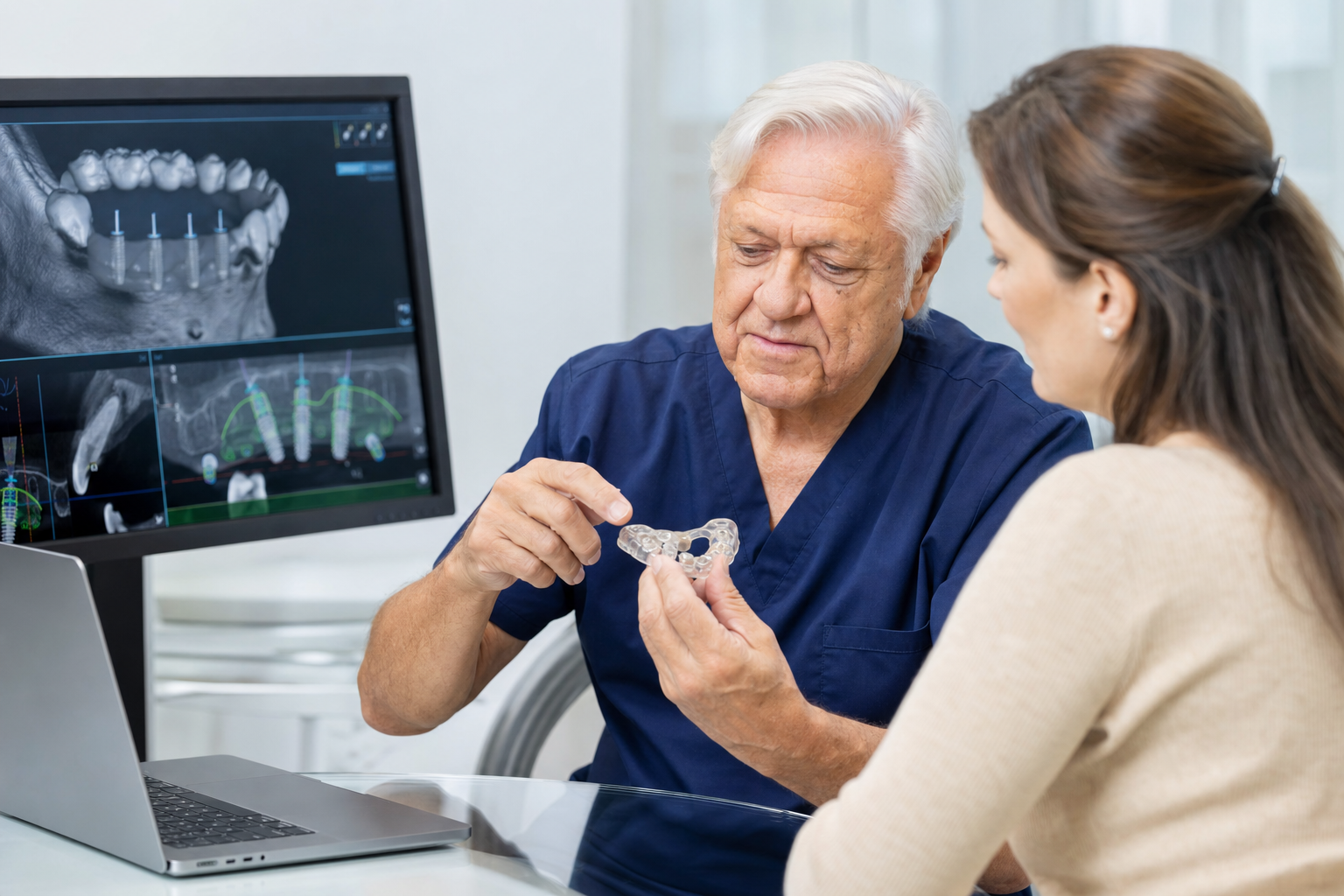
Plan in 3D. Place with precision.
CBCT imaging, digital implant planning, and surgical guides transfer the ideal position into surgery with controlled accuracy.
What it is
Digital planning that guides surgery
Instead of relying only on freehand placement, we use CBCT scans and digital models to design the ideal implant position relative to bone, nerves, sinuses, and the final tooth shape. A surgical guide then transfers that plan into the operating field with controlled accuracy.
How it works
From scan to guided placement
3D CBCT imaging
A cone-beam CT map shows bone volume, density, and critical anatomy so we know where implants can safely be placed.
Digital implant planning
We design implant positions in three dimensions, aligning surgical needs with prosthetic goals - bite, aesthetics, and long-term function.
Surgical guide fabrication
A custom guide is produced to match your anatomy and the approved digital plan, ready for use on the day of surgery.
Guided implant placement
During surgery, the guide helps control position, angulation, and depth - reducing guesswork and supporting consistent outcomes.
Prosthetic alignment
Because placement was planned for the restoration from the start, temporary and final teeth can fit more predictably.
Patient benefits
Why guided implantology improves outcomes
Precision is not a marketing slogan - it protects anatomy and supports restorations that last.
- Greater accuracy in implant position, angle, and depth
- Improved safety near nerves, sinuses, and limited bone
- More predictable aesthetics and bite function
- Often less invasive approaches when anatomy allows
- Clearer communication for international patients reviewing plans remotely
- Stronger foundation for complex reconstruction and full-arch cases
- Useful support in implant rescue and revision surgery when anatomy is compromised
- Better alignment between surgical placement and laboratory restorations
When we use it
Cases that benefit from guided workflows
Not every implant requires a surgical guide. Clinical judgment decides when digital guidance adds the most value. Guided implantology is especially helpful for:
- Single and multiple implants where prosthetic position is critical
- Full-arch and full mouth restoration planning
- Sites with limited bone or proximity to vital structures
- Bone-augmented sites after regenerative treatment
- Revision and Implant Rescue cases with altered anatomy
Your consultation and CBCT review determine whether a guided protocol is appropriate for your case.
Related
Related
Curious whether a guided plan is right for you?
Request an online consultation. Our team can review your imaging and explain when guided implantology adds the most value.