Implant Rescue Program
Corrective implant treatment after unsuccessful procedures - restoring function, rebuilding confidence, and changing lives.
At European Implant Institute, we specialize in helping patients who require complex corrective implant treatment after unsuccessful dental procedures performed abroad or at home.
We don’t judge the past. We rebuild the future.
Restoring Function. Rebuilding Confidence. Changing Lives.
We don’t judge the past. We rebuild the future.
A second chance starts with clarity, careful planning, and a team built for complex reconstruction.
Restoring Function. Rebuilding Confidence. Changing Lives.
Who we help
Who is this program for?
This program is designed for patients who experience:
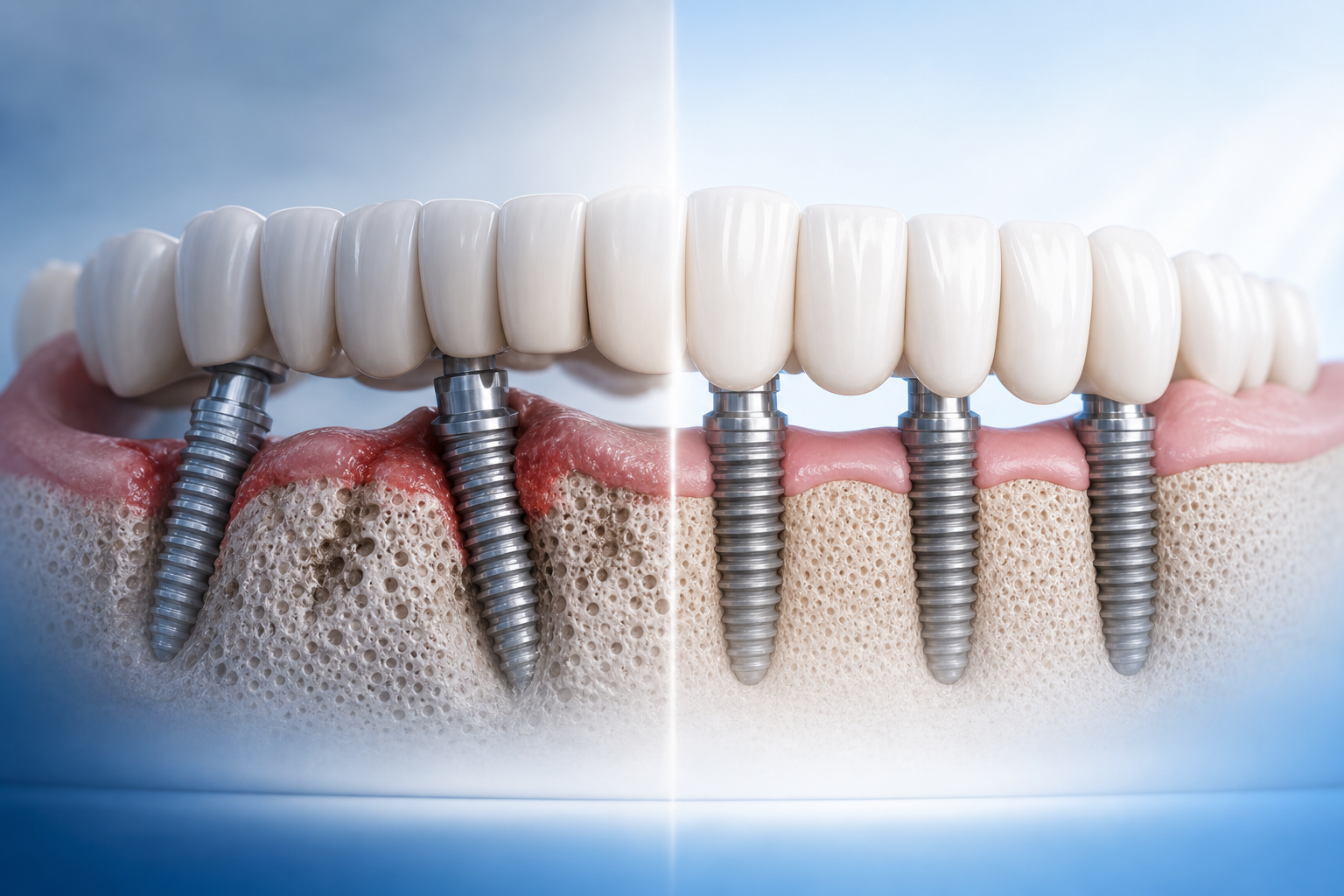
- Failed All-on-4 or All-on-6 treatments
- Loose or failing dental implants
- Peri-implantitis and chronic infections
- Severe bone loss
- Difficulty chewing or speaking
- Poor aesthetics
- Persistent pain or discomfort
- Loss of confidence following previous treatment
Whether your previous treatment was performed abroad or in your home country, we are here to help.
Clinical pathway
Our Implant Rescue Protocol
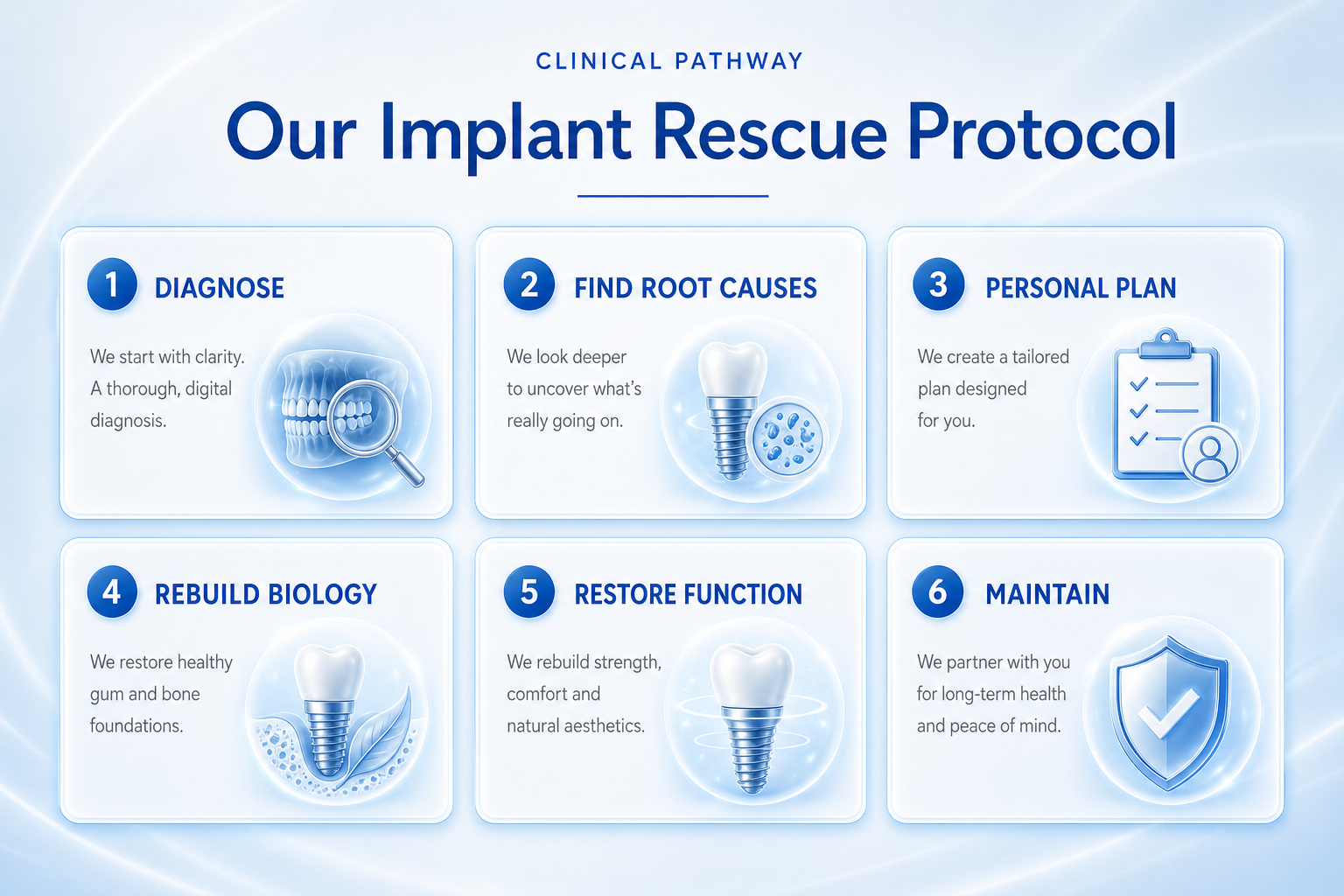
Phase 1 - Comprehensive diagnostic assessment
Every successful reconstruction begins with understanding the complete picture.
- 3D CBCT imaging
- Digital smile analysis
- Occlusal assessment
- Soft tissue evaluation
- Implant stability assessment
- Comprehensive photographic documentation
We never treat symptoms alone. We identify the real cause of the problem.
Phase 2 - Finding the root cause
Failed implant treatment is rarely caused by a single factor. Our specialists carefully evaluate issues such as:
- Incorrect implant positioning
- Insufficient bone volume
- Peri-implantitis
- Occlusal overload
- Prosthetic complications
- Poor treatment planning
- Inadequate implant selection
- Soft tissue deficiencies
Only after identifying every contributing factor do we develop your personalized treatment plan.
Phase 3 - Personalized rescue treatment plan
Every patient is unique. Depending on your condition, treatment may include:
- Preservation of existing implants whenever possible
- Infection control
- Bone regeneration procedures
- Soft tissue reconstruction
- Implant replacement
- Full prosthetic rehabilitation
- Complete oral reconstruction
Our objective is always to preserve as much healthy tissue as possible while achieving predictable long-term success.
Phase 4 - Advanced biological reconstruction
This is where European Implant Institute truly stands apart. Complex reconstruction often requires advanced regenerative procedures. Our biological protocols may include:
- Major bone augmentation
- Advanced guided bone regeneration (GBR)
- Soft tissue reconstruction
- PRF (platelet-rich fibrin)
- Advanced regenerative biomaterials
- Microsurgical techniques
- Innovative biological chamber concepts for predictable bone regeneration
Our focus is not simply replacing missing teeth. Our goal is rebuilding healthy foundations that last.
Phase 5 - Functional and aesthetic rehabilitation
True success is measured by more than X-rays. We restore:
- Comfortable chewing
- Natural speech
- Facial support
- Beautiful smile aesthetics
- Self-confidence
- Long-term oral function
Our objective is to help you feel like yourself again.
Phase 6 - Long-term maintenance
Successful implant treatment does not end on the day of surgery. Every patient receives a personalized maintenance protocol including:
- Regular clinical reviews
- Professional hygiene care
- Digital monitoring
- Home care instructions
- Long-term follow-up
Our relationship with our patients continues long after treatment is completed.
Why patients choose us
Why choose European Implant Institute?
High-volume clinics abroad can undercut on price. What they cannot buy is judgment. Patients choose us because clinical leadership rests with Dr. Bojidar Dimitrov - over 45 years across the USA, Western Europe, and Bulgaria - and because our bridges use CE-certified German materials made in the EU.
- Dr. Dimitrov: 45+ years across USA, Western Europe, and Bulgaria
- Clinical practice since 1997 · Smile Dental Services since 2000
- 1,500-2,000 dental implants placed every year
- Extensive experience with complex reconstruction and rescue cases
- Advanced bone regeneration - the Dimitrov Method
- CE-certified German bridge materials, made in the EU
- Digital treatment planning and guided workflows
- Long-term patient support after you fly home
We believe that even the most challenging cases deserve a second chance - and that experience plus materials quality is what makes a second chance realistic.
Why surgeon experience matters →A message of hope
A previous unsuccessful treatment does not define your future
Even if you have been told that nothing more can be done, there may still be solutions. At European Implant Institute, we specialize in giving patients a second chance through advanced implant reconstruction and biological rehabilitation - because every smile deserves another opportunity.
Common questions
Frequently asked questions
- Can you help if my All-on-4 or All-on-6 failed?
- Yes. Failed full-arch treatments are a core part of our Implant Rescue Program. We assess the cause - infection, bone loss, positioning, or prosthetic issues - then plan corrective reconstruction.
- What if another clinic said nothing more can be done?
- Many patients come to us after being declined elsewhere. We review your scans and history to see whether regenerative reconstruction and revision implant surgery are still possible.
- Do you treat peri-implantitis and loose implants?
- Yes. We manage peri-implantitis, failing implants, and revision cases with infection control, bone and soft-tissue reconstruction, and implant salvage or replacement when needed.
- I had treatment abroad - can you still help?
- Absolutely. Whether treatment was performed abroad or at home, we focus on finding the root cause and rebuilding a stable foundation - without judging prior care.
Ready to discuss your rescue case?
Request an online consultation. Share your history and imaging when you can - we will outline whether the Implant Rescue Protocol is appropriate for your situation.