Implant Rescue: what patients should know after failed implant treatment
A patient guide to loose implants, peri-implantitis, failed All-on-4, and when reconstruction may be needed after unsuccessful treatment.

What implant rescue actually means
Implant Rescue is not simply replacing a bridge. It means understanding why treatment failed, what can be preserved, and whether healthy foundations must be rebuilt before a new restoration can last.
When implant treatment starts to feel loose, painful, infected, or impossible to chew with, most patients ask the same question: can this be fixed without starting from zero? Sometimes the answer is yes. Sometimes the only safe solution is to remove failed work, rebuild the biology, and restore the mouth again in a more structured way.
Implant Rescue is the name we use for that second-opinion and corrective pathway. It is not one specific operation. It is a clinical process that begins with diagnosis: what failed, why it failed, what tissue is still healthy, and whether the existing implants can be preserved or must be removed.
What Implant Rescue actually means
Implant Rescue is corrective treatment after previous implant work has failed or is failing. That may include loose implants, peri-implantitis, bone loss around implants, unstable bridges, pain, poor function, or aesthetics that were never right. The aim is not to cover the problem with a new bridge. The aim is to identify the real failure pattern and build a safer long-term plan.
Why full-arch implant cases fail
Most rescue cases do not fail because of one single mistake. More often there is a chain of problems: weak case selection, insufficient bone for the chosen design, overload from the bridge, unresolved infection, soft-tissue problems, or implants placed in positions that make stable prosthetics difficult. Rescue starts by mapping the whole chain rather than blaming one visible symptom.
What a second opinion should include
A serious rescue opinion should include your symptoms, photographs, previous treatment records if available, and most importantly CBCT imaging. The questions are practical: which implants are stable, where bone has been lost, whether infection is present, whether the bridge design is contributing to overload, and whether the mouth can be rebuilt in stages rather than rushed into another full-arch promise.
Can failing implants be saved?
Sometimes yes. If certain implants are stable, tissues are manageable, and the prosthetic design can be corrected, part of the existing work may be preserved. In other cases, saving implants simply preserves the problem. Rescue is successful when the final foundation is reliable, not when the maximum amount of old hardware is left in place.
Common warning signs
Signs your implants may be failing
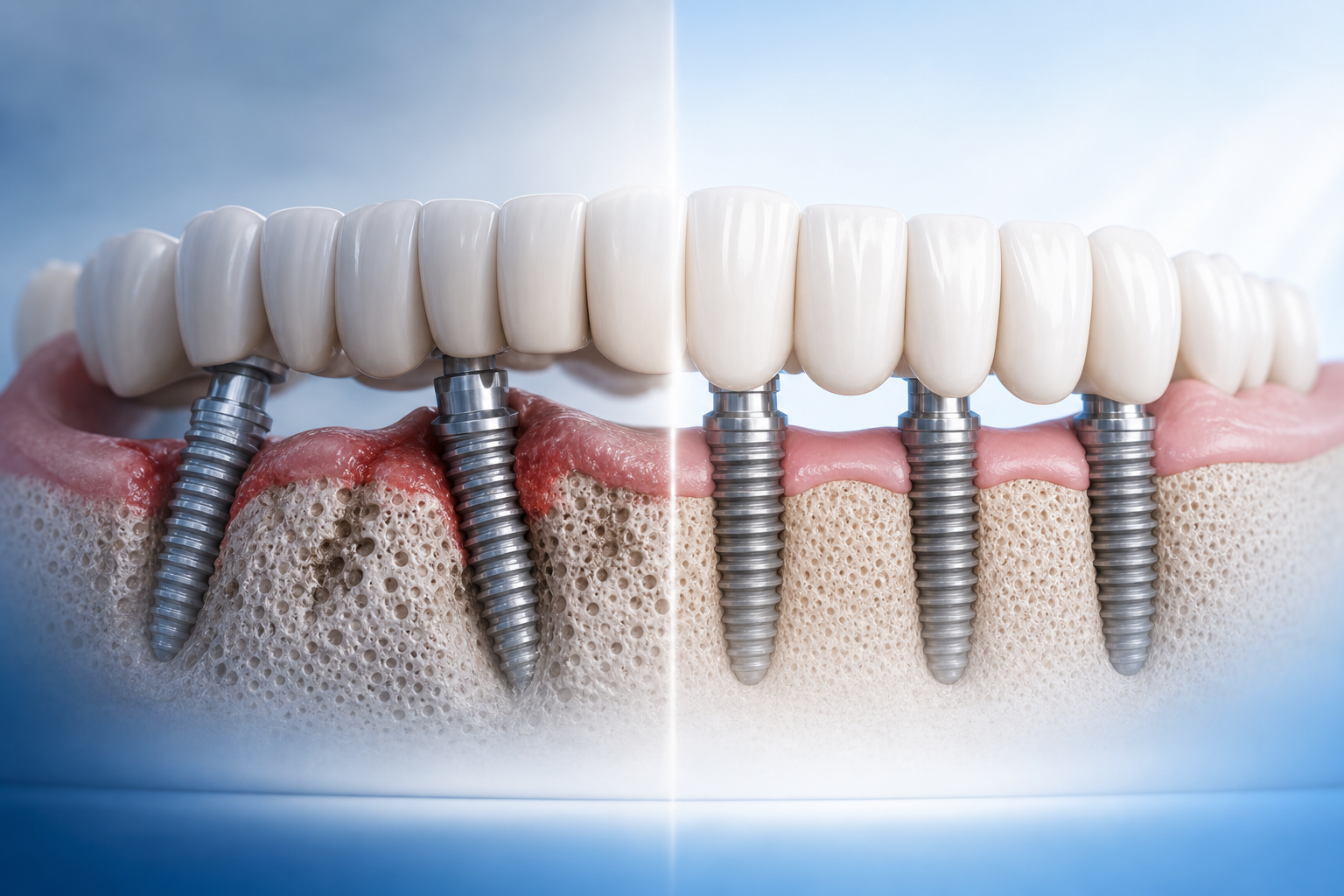
- A full-arch bridge or single implant feels loose or unstable
- Persistent pain, pressure, or discomfort when chewing
- Bleeding, swelling, pus, or bad taste around implants
- Difficulty cleaning under a bridge and repeated inflammation
- New speech problems or loss of bite stability
- Visible gum recession or dark spaces around the implants
- A bridge that looks acceptable but no longer feels functional
- You were told everything is fine, but the mouth keeps deteriorating
What happens first
What diagnosis usually involves
The first step is not new surgery. It is understanding the current state of the mouth. That usually means reviewing your history, any records from the original clinic, photographs, and 3D imaging to see bone levels, implant angulation, proximity to anatomical structures, and signs of infection or overload.
From there, rescue planning separates into practical decisions: what can be monitored, what can be corrected prosthetically, what needs biological treatment, and what has to be removed before reconstruction becomes realistic.
- CBCT imaging to assess bone, implant position, and anatomical limits
- Clinical review of bleeding, pain, mobility, and soft tissue condition
- Bridge and bite analysis to identify overload or design problems
- Review of old records, implant passport, and prior surgical history if available
- A written plan that explains preserve vs remove vs rebuild options
Preserve or rebuild
When implants can be saved, and when full reconstruction is safer
Implants may be preserved
When implants are stable, infection is limited or manageable, bone support remains acceptable, and the prosthetic design can be corrected without ignoring the original cause of failure.
Partial reconstruction may be needed
When some implants are usable but others are compromised, or when one part of the bridge design is failing while other areas can still support treatment.
Full removal and reconstruction may be safer
When infection, bone loss, poor positioning, or unstable prosthetics mean the current foundation cannot realistically carry a durable restoration.
Before you contact a clinic
What to prepare before asking for an Implant Rescue opinion
- Any CBCT scan, panoramic X-ray, or report you already have
- Photographs of the bridge, gums, and any visible swelling if possible
- The implant passport or brand information, if the clinic gave it to you
- A short timeline: when treatment happened, when symptoms started, what changed
- A list of medical conditions, smoking history, and relevant medications
- An honest description of what you can and cannot currently chew
For international patients
Why rescue should be planned before you fly
Patients often want an immediate answer about whether they should book flights. In rescue cases, the safest answer usually comes after imaging review. Some mouths can be stabilized quickly. Others need staged reconstruction, additional healing time, or a longer plan than a standard treatment package allows.
That is why a strong rescue pathway starts with records and remote review before travel. The goal is to avoid another rushed decision made on incomplete information.
Common questions
Questions patients ask about Implant Rescue
- Does Implant Rescue always mean removing all implants?
- No. Some rescue cases allow preservation of stable implants. The decision depends on bone support, infection, prosthetic design, and whether keeping the existing implants would leave the original failure pattern unresolved.
- Can peri-implantitis be treated without replacing the whole bridge?
- Sometimes yes, especially when disease is localized and the underlying implant positions and bridge design remain workable. In other cases peri-implantitis is one part of a larger structural problem, so treating inflammation alone is not enough.
- Why is CBCT so important in rescue cases?
- Because rescue decisions depend on bone levels, implant angulation, anatomy, and hidden defects that cannot be judged reliably from symptoms or simple photographs alone.
- How do I know if my bridge problem is urgent?
- Mobility, swelling, pus, pain, sudden bite changes, or difficulty chewing comfortably all justify prompt review. Even when the situation is not an emergency, delaying assessment can reduce the number of options available later.
Related
Related
Need a second opinion on failing implant work?
Request an online consultation. Share your imaging, symptoms, and treatment history when you can - we will explain whether your case looks suitable for preservation, staged rescue, or full reconstruction.